
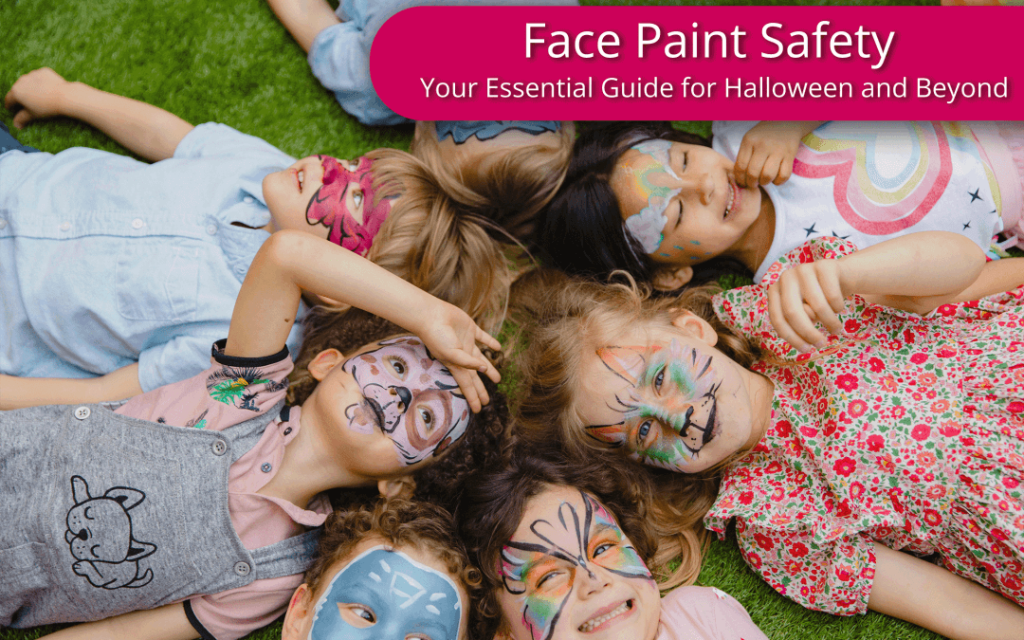
With Halloween just around the corner, countless children will soon transform into ghosts, ghouls, and goblins using face and body paints. Before you grab that brush and palette, let’s explore what you need to know about these specialty cosmetic products.
First Things First – Not All Paints Are Created Equal
Here’s a crucial point that might seem obvious but which bears repeating: only use products specifically designed and tested for cosmetic use on skin. That “non-toxic” label on craft paints and crayons doesn’t mean they’re safe for your face. Art supplies undergo completely different testing than cosmetics and can trigger allergic reactions when applied to skin.
Similarly, don’t assume food-grade ingredients automatically translate to skin safety. Your digestive system has sophisticated detoxification processes that your skin simply doesn’t possess. What’s safe to eat isn’t necessarily safe to wear.
Testing and Application
Government guidance in several countries recommends keeping these products away from children under three (who are more likely to ingest them or rub their eyes) and avoiding use on sensitive or damaged skin altogether.
For everyone else, the golden rule remains: patch test first. Apply a small amount to your inner arm at least 24 hours before the big event. If any redness, itching, or irritation appears, skip that product entirely.
And while it might be tempting to include your furry friends in the festivities, never use face paints on pets. These products aren’t formulated for animals and could cause serious harm if ingested or if they irritate their skin.
What Makes Face Paint Safe?
When manufacturers develop face and body paints, they must consider both local skin effects and systemic absorption. Since some ingredients can penetrate the skin barrier and enter circulation, comprehensive safety assessments examine everything from acute toxicity to skin sensitisation and eye irritation.
This is particularly important given how these products are used, often covering large areas of skin, sometimes repeatedly over consecutive party nights. Reputable brands invest in thorough testing that accounts for this real-world usage pattern.
The Cruelty-Free Question
Face and body paints are classified as cosmetics, meaning they’re covered by animal testing bans in the UK, Europe, and increasingly worldwide. But “not tested on animals” shouldn’t mean “not tested at all.” The focus should be on how products are tested for safety, not how they aren’t.
Modern science offers human-relevant testing methods that ensure products are safer than ever. Companies like XCellR8 have developed completely animal-free testing protocols that provide reliable safety data while meeting ethical demands for cruelty-free and vegan products.
Shopping Smart – Choosing Your Products
While established brands often provide confidence through their track records and resources for comprehensive safety testing, don’t automatically dismiss smaller brands. Many indie companies, particularly those selling online, are committed to transparency and safety, they just need support in conducting credible safety assessments that satisfy both regulations and consumer expectations.
Ready to Paint the Town (Safely)
Product safety might seem like a frightening topic, but it doesn’t have to haunt your Halloween celebrations. By choosing products designed for skin use, following basic safety guidelines, and supporting brands that prioritise proper testing, you can focus on the fun part – creating those spectacular transformations.
For companies interested in ensuring their face and body paints meet the highest safety standards through animal-free testing methods, XCellR8 offers comprehensive safety and efficacy assessments.
Now, armed with knowledge rather than just face paint, go forth and create some Halloween magic!
Contact us if you’d like to learn how you can support our mission, become a corporate sponsor or donate to our crowdfunder.

